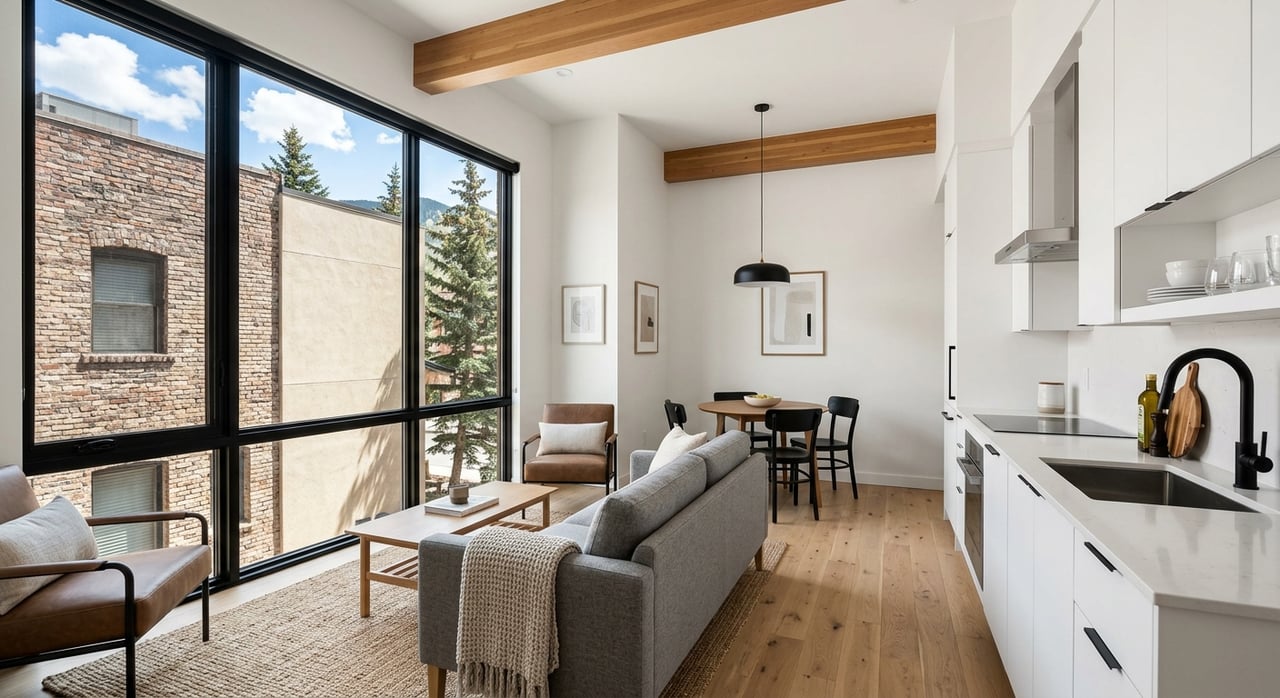
If you live in Phoenix and keep dreaming about cooler air, walkable weekends, and a place that feels different the moment you arrive, Downtown Flagstaff deserves a close look. For many second-home buyers, the goal is not just owning in the mountains. It is finding a weekend base that is easy to reach, simple to enjoy, and lively enough that you actually use it often. This guide will help you understand what downtown ownership looks like, where it shines, and what practical details matter before you buy. Let’s dive in.
Why Downtown Flagstaff fits weekend owners
Downtown Flagstaff works well for repeat weekend use because it is relatively close to Phoenix. Flagstaff is about 151 miles north of Phoenix Sky Harbor Airport, and the drive is about 2 hours and 15 minutes in normal conditions. I-17 is the main corridor, which makes the route familiar and direct for many Valley buyers.
That said, convenience here comes with a mountain-town reality. Winter weather can affect travel times, so the trip is not always perfectly predictable. If you are planning frequent cold-season visits, it helps to think of flexibility as part of the lifestyle.
The setting is also a real change from the Valley. NOAA climate normals for Flagstaff show average January highs and lows of 43.9°F and 12.9°F, while average July highs and lows are 81.6°F and 46.9°F. The area also averages 65.3 inches of snowfall annually, which tells you this is a true four-season environment, not just a cooler version of Phoenix.
What makes downtown feel different
One of downtown’s biggest advantages is how much you can do without getting back in your car. The City of Flagstaff reports that more than 13% of all trips citywide are made on foot, and in the central area, including downtown, 17% of trips are walked. The city’s downtown planning also continues to emphasize a pedestrian-first environment.
For a weekend owner, that walkability can change how your time feels. Instead of spending part of every stay driving, parking, and planning around traffic, you can step out your door and move through the core on foot. That creates a more relaxed rhythm, especially when your goal is to maximize a short stay.
Downtown also benefits from access to the FUTS system, with 58 miles of bicycle and pedestrian trails available through the network. That adds another layer of convenience for owners who want a compact home base with easy local movement.
Dining and shopping are part of daily life
A weekend place works better when it feels active without requiring much effort from you. Downtown Flagstaff’s business alliance says the district has more than 85 restaurants and bars. That gives you a wide range of options for coffee, dinner, a casual drink, or a last-minute meal after arriving from Phoenix.
The shopping experience also supports the small-scale, walkable feel many second-home buyers want. Old Town Shops at Birch and Leroux lists 10 independently owned shops and restaurants. For you, that means downtown can feel local and varied even within a compact area.
This is one of the clearest lifestyle trade-offs in downtown ownership. You are not buying for a sprawling, private retreat pattern. You are buying into a mixed-use setting where dining, retail, and everyday activity are part of the appeal.
Arts, events, and evening energy
Downtown Flagstaff is not only active during the day. Creative Flagstaff says First Friday ArtWalk takes place on the first Friday of every month from 5:00 to 9:00 p.m., with galleries, shops, restaurants, and venues participating in the evening. That kind of recurring event can make short stays feel fuller without requiring much planning.
The Orpheum Theater adds another steady entertainment anchor. It features live music, film screenings, and community events, helping downtown maintain energy beyond shopping and dining hours. For weekend owners, that matters because it supports a more complete stay in a compact area.
Another part of Flagstaff’s identity is the night sky. The City says Flagstaff was recognized as the world’s first International Dark Sky City, and the city actively reviews and enforces outdoor lighting standards. That contributes to the character of downtown evenings and the broader mountain-town atmosphere.
Nearby anchors add convenience
A downtown base can be especially appealing when key destinations are close by. Lowell Observatory says it is just one mile west of the historic downtown area. That gives you an easy nearby outing for a weekend without needing to build a big itinerary.
Transit also plays a supporting role. Mountain Line’s Route 2 and Route 66 both serve the Downtown Connection Center with weekend and holiday service. Even if you mostly drive to Flagstaff, local transit can make short stays more convenient once you are in town.
Put together, these features support a park-once lifestyle. That can be a major advantage if your goal is to arrive Friday, settle in quickly, and spend the rest of the weekend enjoying the area rather than managing logistics.
Practical realities to understand before buying
Downtown Flagstaff works best when you go in with clear expectations. The biggest practical issue for many buyers is parking. ParkFlag manages public parking downtown, and the city notes that supply is limited and actively managed for efficiency.
Public parking is $1 per hour, many spaces are time-limited, and overnight parking is only allowed by permit in the Phoenix Avenue lot. If you are used to easy suburban parking, this can feel like a meaningful shift. It does not make downtown ownership a bad fit, but it does mean parking should be part of your home search criteria from the beginning.
Winter preparation is another real factor. ADOT advises drivers to plan their route, check AZ511 for current road and weather conditions, and prepare vehicles for snow, ice, and freezing temperatures. In other words, owning in downtown Flagstaff is not just about enjoying four seasons. It also means planning for them.
Short-term rental rules matter
Some buyers consider offsetting ownership costs with short-term rental income. If that is part of your thinking, it is important to know that Flagstaff has an established short-term rental framework. The city says owners must obtain a license, and it defines a short-term rental as a stay of fewer than 30 consecutive days.
The city’s 2026 ordinance update page says new requirements take effect July 1, 2026, including a higher annual fee and updated neighbor-notification and safety rules. If rental flexibility matters to you, these details should be part of your early due diligence, not an afterthought after closing.
This is where local guidance can make a big difference. A property that feels ideal for personal weekend use may still need a closer review if you also want income potential.
What downtown ownership is really buying you
The broader planning direction for downtown helps explain the lifestyle. The city’s regional plan describes historic downtown as a mix of service and government jobs, education, offices, retail, and high-density residential and mixed-use development. The Downtown Vision & Action Plan is intended to guide improvements over the next five to ten years.
That means downtown ownership is centered on a compact, mixed-use core. It is not designed to function like a car-dependent suburban escape. If you love the idea of being in the middle of restaurants, events, and everyday street activity, that can be a strong positive.
If, on the other hand, you want maximum parking flexibility, a large yard, or a more private retreat pattern, downtown may feel less aligned with your goals. The right fit depends less on price point alone and more on how you actually want to spend your weekends.
Who Downtown Flagstaff suits best
Downtown Flagstaff is especially well suited to Phoenix and Valley buyers who want frequent short stays. The combination of drive access, walkability, dining, entertainment, and a clear mountain-town identity supports a use pattern where you come often and make the most of a compact stay.
It can also appeal to buyers who value lifestyle efficiency. If you want to arrive, park, and enjoy your surroundings with minimal planning, downtown offers a setup that supports that goal. For many second-home buyers, that ease is what turns a nice idea into a property they use again and again.
The key is being honest about your priorities. If your ideal weekend includes walking to dinner, catching an event, enjoying cooler temperatures, and staying in the middle of an active core, downtown is worth serious consideration.
If you are exploring Downtown Flagstaff as a second home, weekend base, or investment-minded purchase, Candace Schacherbauer can help you compare lifestyle trade-offs, narrow the right property type, and navigate the process with local insight and hands-on support.
FAQs
Is Downtown Flagstaff close enough for Phoenix weekend trips?
- Yes. Flagstaff is about 151 miles from Phoenix Sky Harbor Airport, and the drive is about 2 hours and 15 minutes in normal conditions, though winter weather can affect travel time.
Is Downtown Flagstaff walkable for second-home owners?
- Yes. The City of Flagstaff reports that more than 13% of trips citywide are made on foot, and 17% of trips in the central area, including downtown, are walked.
What is parking like in Downtown Flagstaff?
- Parking is managed and limited. Public parking is $1 per hour, many spaces are time-limited, and overnight parking is only allowed by permit in the Phoenix Avenue lot.
Can you use a Downtown Flagstaff property as a short-term rental?
- Potentially, yes. The city requires a short-term rental license for stays of fewer than 30 consecutive days, and updated rules take effect July 1, 2026.
What kind of lifestyle does Downtown Flagstaff offer weekend owners?
- Downtown is best for buyers who want a compact, mixed-use, pedestrian-oriented setting with restaurants, events, and entertainment close at hand.
Does Downtown Flagstaff get real winter weather?
- Yes. NOAA climate normals show average annual snowfall of 65.3 inches, along with cold winter temperatures that make snow and ice part of the ownership experience.
