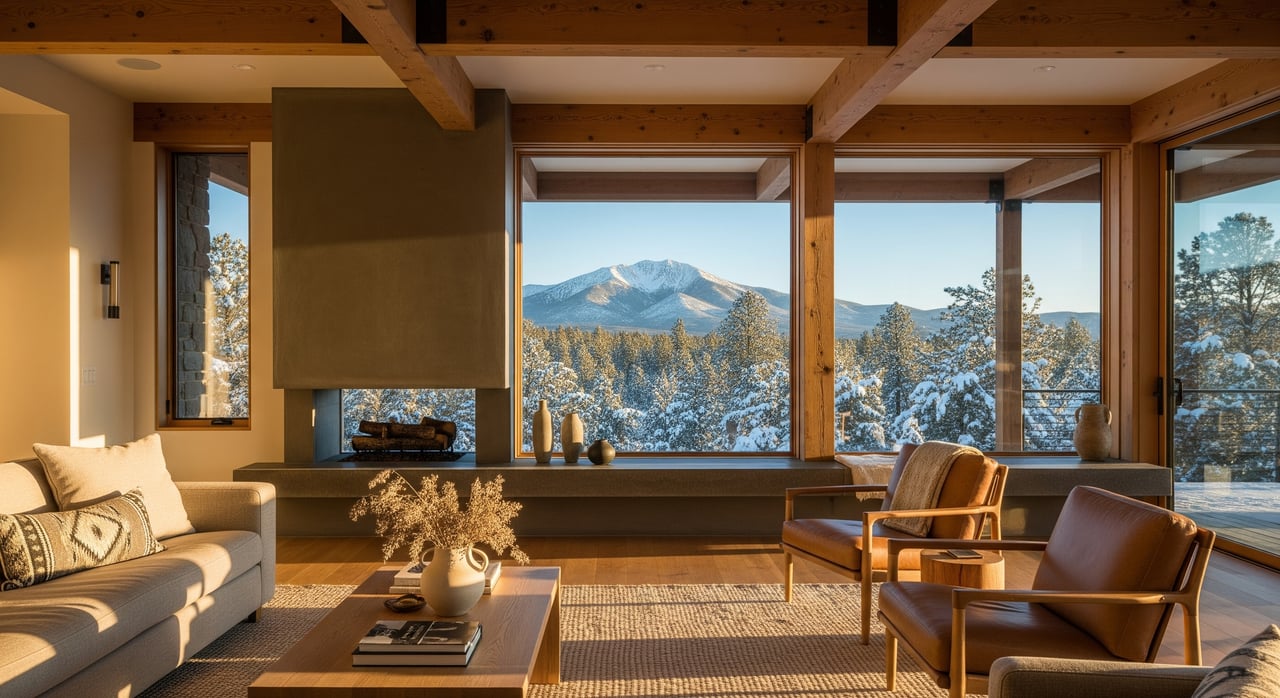
Are you dreaming of crisp pine air, cooler summers, and access to trails minutes from your door? If you are considering a move to Flagstaff’s 86004, you are not alone. The high-country lifestyle feels fresh and restorative, but it comes with real differences from the Valley or out of state. In this guide, you will learn what life at 7,000 feet is like, how to plan for snowy seasons, which neighborhood types fit different lifestyles, and how remote tours and digital closings typically work here. Let’s dive in.
Life at 7,000 feet
Flagstaff sits around 6,900 to 7,000 feet above sea level. The altitude, sun, and mountain climate shape daily life more than many movers expect. You can look forward to warm days, cool nights, and winters that bring regular snowfall.
During your first 48 to 72 hours, you may feel mild altitude effects like headache, shortness of breath, or fatigue. Hydrate more than usual, take it easy on workouts, limit alcohol, and check with a physician ahead of time if you have heart or lung conditions. UV exposure is stronger here, and the air is drier, so make sunscreen and lip balm part of your routine.
Indoor humidity is often low, especially in winter. Many homes use humidifiers to keep air comfortable. The boiling point is lower at elevation, so baking and boiling can take a little adjustment. Pets need time to adapt too, especially short‑snouted breeds, so start with shorter walks and moderate activity.
Winter prep and home care
Snow is part of the Flagstaff lifestyle. Plan for more frequent heating use, consistent snow removal, and seasonal maintenance.
- Heating systems: Confirm whether a home uses forced air, heat pumps, propane, pellet or wood stoves. Ask about insulation and recent service. Request winter utility bills to budget for cold months.
- Roofs and gutters: Snow load and ice damming are real. Regular roof checks, gutter maintenance, and safe ice mitigation help protect your home.
- Snow removal: Understand who clears driveways, walkways, and private roads. In some communities an HOA handles private streets, while individual owners manage their own driveways and sidewalks.
- Exterior systems: Outdoor plumbing and sprinkler lines need winterization to prevent freeze damage. Plan for seasonal shutoff and spring start‑up.
- Vehicles: All‑wheel drive or 4WD, winter tires, and an emergency kit are common sense at elevation. Engines lose some power up here, and winter traction matters for safety.
Neighborhood types at a glance
Flagstaff offers a range of settings, from manicured golf communities to walkable, historic streets and quiet forest‑edge subdivisions. Each comes with tradeoffs in maintenance, utilities, and access. Here is how to think through the fit.
Golf communities
Golf communities usually have smaller to medium lots, manicured landscaping, and established HOAs with rules and dues. You may find clubhouses or on‑site services, and the terrain is often flatter than heavily wooded areas, which can make snow clearing simpler.
- Pros: Amenities and common areas, consistent standards, potentially easier snow management on flatter lots.
- Consider: HOA fees, CC&Rs, privacy near fairways, and microclimates created by open greens. Understand irrigation systems and how landscape maintenance works in winter.
- Ask: What are the HOA rules for snow and private road maintenance? How are irrigation and landscaping handled in cold months?
Downtown and central Flagstaff
Close to restaurants, shops, Northern Arizona University, and cultural venues, central areas tend to be more walkable. You get shorter commutes, better transit coverage, and city services for street and curb maintenance.
- Pros: Walkability, proximity to services, and stronger transit options.
- Consider: Older homes can have character along with older systems, insulation, or roofs that need attention. Parking and winter street‑clearing patterns matter. Noise and nightlife can be factors in busy pockets.
- Ask: How does on‑street snow removal work here? Is the property on municipal water and sewer?
Forest‑edge and rural subdivisions
If you want larger lots, more trees, and quick access to trails and national forest, focus on the forest‑edge and rural options. These areas trade convenience for privacy and space.
- Pros: Privacy, nature access, and a quiet setting.
- Consider: Higher maintenance needs, including defensible space for wildfire mitigation, needle and leaf management, and potentially heavier snow drifts. Some roads are dirt or private and may be steeper or slower to plow. Utilities can vary, with some properties on wells and septic, and broadband can be limited.
- Ask: Is the home within a Wildland‑Urban Interface and what mitigation has been completed? Are roads private or shared, and who pays for maintenance? Is water and waste municipal or private?
Commutes and travel times
Flagstaff’s compact size keeps most in‑town commutes in the 10 to 30 minute range. Major employers cluster around downtown, NAU, and Flagstaff Medical Center.
For regional travel, plan based on season and road conditions. The drive to Phoenix via I‑17 is roughly 140 to 150 miles and takes about 2.5 to 3 hours in normal conditions. Winter storms and chain requirements can add time or cause closures, so build flex into your schedule. Sedona is about 45 to 60 minutes away, and the Grand Canyon South Rim is roughly 1.5 to 2 hours by car.
Air travel options include Flagstaff Pulliam Airport for limited commercial flights, with many travelers using Phoenix Sky Harbor for national and international routes. Amtrak’s Southwest Chief stops in Flagstaff for long‑distance rail. Within the city, Mountain Line bus routes serve core areas more frequently than outlying subdivisions.
If you plan frequent Phoenix trips, stress‑test that plan during winter. Aircraft connections or remote work flexibility can help you avoid long storm‑day drives.
Remote work and internet
Many movers from the Valley and out of state come for the lifestyle while keeping remote jobs. Broadband is strongest in denser areas, with fiber and cable available in many central neighborhoods. In forest‑edge or rural zones, options may include fixed wireless, DSL, satellite, or Starlink.
Always confirm internet providers and available speeds at the exact address, not just the neighborhood. If reliable video calls are essential, build connectivity checks into your due diligence.
Remote tours and closings
Buying from afar is common in Flagstaff. Digital tools make it workable, but you should pair convenience with careful verification.
How the process usually works
- Initial search and virtual tours: Use listing photos, videos, and 3D tours to screen homes. Schedule live video walkthroughs and request closeups of rooflines, mechanicals, driveway slope, and gutters.
- Offers and contracts: Submit offers electronically through e‑signature platforms. Set clear timelines for inspections and contingencies.
- Inspections: Hire local inspectors and ask for detailed photo and video reports. Consider add‑on checks like roof assessments after winter, chimney inspections, septic dye tests, and well water analysis where applicable.
- Title, lending, and closing: Many local title companies and lenders support electronic workflows and partial or full e‑closings. Arizona permits electronic signatures and remote notarization in many cases, though some documents may still require wet signatures or in‑person notarization depending on lender and title preferences.
- Funds and final steps: Verify wire instructions by calling a known, trusted number for the title company. Do not rely on email alone. If wet signing is needed, mobile notaries or local settlement agents can meet you where you are.
Key protections to build in
- Confirm whether a full e‑closing is possible or if any steps require in‑person signatures.
- Ask the title company which notaries, inspectors, and contractors they recommend.
- Plan for secure funds transfer and phone verification of wire instructions to avoid fraud.
Relocation checklist
Use this quick checklist to keep your move on track.
Before you commit
- Verify current market data with a local agent or MLS to gauge pricing, inventory, and days on market.
- Ask about HOA fees, CC&Rs, and snow or private road maintenance responsibilities.
- Confirm utilities: municipal water and sewer versus well and septic; heating fuel type; internet providers and speeds at the exact address.
- Check wildfire risk and requirements for defensible space and fire‑wise practices.
- Get full disclosure on road conditions, paved vs. private access, and any seasonal closures.
During offer and inspection
- Hire local inspectors and request comprehensive photo and video reports. Consider septic, well water, radon, chimney, and roof‑after‑winter checks when relevant.
- Confirm access for moving trucks and service vehicles, including driveway grade and overhead clearances.
- Request recent utility and heating bills to estimate winter costs.
Closing and post‑closing
- Confirm whether e‑closing or remote notarization is available. Get wire instructions and verify by phone before sending funds.
- Line up local locksmith, HVAC servicing, and snow removal for your first winter.
- Plan for acclimatization for you and your pets. Hydrate, adjust activity, and watch for altitude symptoms during the first few days.
- Update vehicle registration and driver’s license based on Arizona MVD requirements.
Seasonal moving tips
- If you can, schedule moves between late spring and early fall for easier road conditions.
- If moving in winter, time your move around daylight hours and forecast windows. Have winter tires, an emergency kit, and snow removal resources ready.
Your Flagstaff guide
A move to Flagstaff’s 86004 is a lifestyle shift toward mountain seasons, trail access, and crisp air. The tradeoffs are real, but with clear expectations and the right plan, you can land smoothly. Whether you want the convenience of central living, the polish of a golf community, or the space of a forest‑edge property, you deserve a guide who understands the day‑to‑day realities at 7,000 feet and can manage remote logistics with confidence.
If you are considering a move, reach out to Candace Schacherbauer for high‑touch, local guidance and a streamlined, digital‑friendly process.
FAQs
What should I know about altitude when moving to Flagstaff?
- Most people adjust within a few days, so hydrate, limit heavy exertion and alcohol at first, and consult your doctor if you have heart or lung conditions.
How do winters in 86004 affect daily life?
- Expect regular snowfall, more heating use, routine snow removal, and seasonal maintenance like roof and gutter care and outdoor system winterization.
Is remote closing legal and common in Arizona?
- Arizona permits electronic signatures and often remote notarization, but availability of full e‑closings depends on your lender and title company.
Is a Phoenix commute realistic from Flagstaff?
- The 140 to 150 mile drive takes about 2.5 to 3 hours in normal conditions, but winter storms and chain requirements can add time, so build flexibility into plans.
What utilities and services should I verify before buying?
- Confirm water and sewer type, heating fuel, internet providers and speeds, HOA rules, and who maintains roads and snow removal for the property and access routes.
