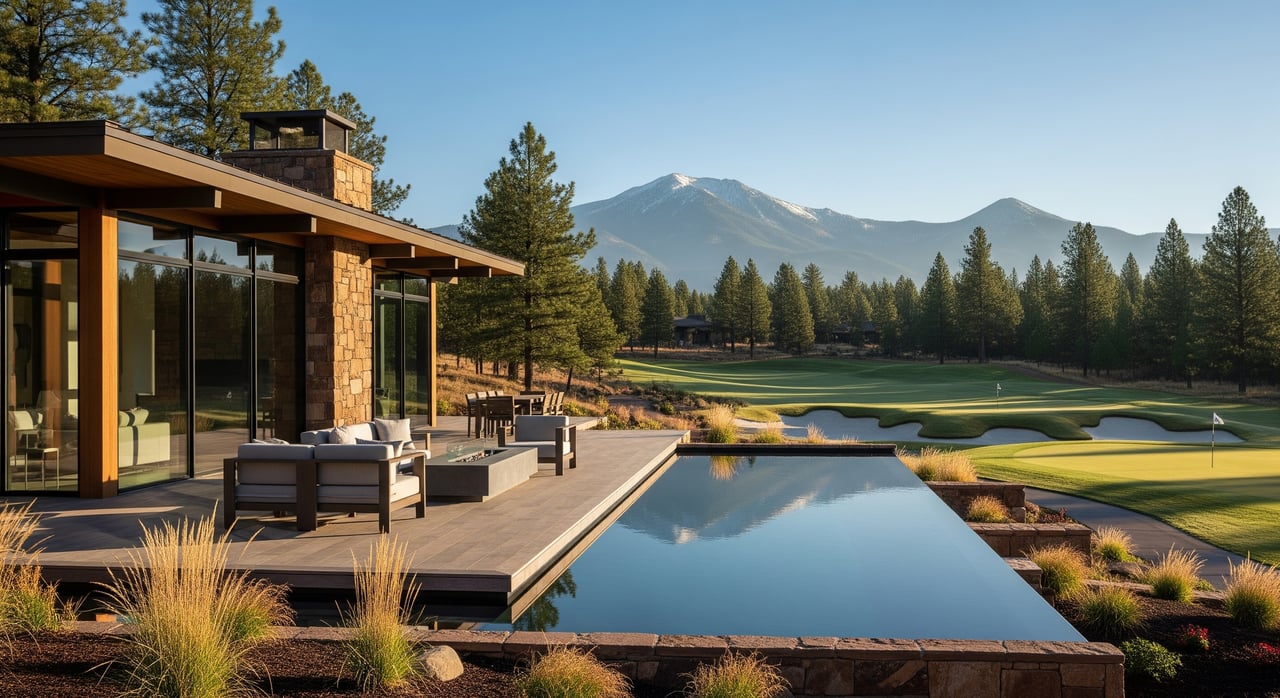
You picture mornings that start with pine-scented air, mountain light, and a fairway view outside your window. In Flagstaff, that vision is real, and it comes with a few unique details you’ll want to understand before you buy. If you’re weighing a home in 86004 near Continental Country Club or a similar neighborhood, you’re smart to look beyond the scorecard.
In this guide, you’ll learn how golf community living works in Flagstaff’s high country. We’ll cover amenities and access, HOA and club rules, seasonal rhythms, typical home features, and the key questions to ask before you write an offer. Let’s dive in.
What a golf community means in Flagstaff
In Flagstaff, a golf community usually blends neighborhood living with club-centered amenities. The community sits at roughly 7,000 feet, so you get four true seasons, cooler summers, and snowy winters. That climate shapes how and when you use the course and outdoor spaces.
Two organizations typically guide daily life. The HOA manages community standards and common areas. The country club runs the golf course and club facilities. They are separate. Property ownership does not always equal club membership, so it pays to confirm exactly what your address includes.
Amenities you can expect
Most Flagstaff golf communities share a familiar set of features. Exact offerings vary by club and season.
- Golf course access with private or member formats. Winter weather can limit play, and shoulder-season maintenance affects schedules.
- Clubhouse spaces for dining, events, and social gatherings.
- Fitness, tennis and pickleball, and often pool and spa areas.
- Walking and biking paths that weave through the pines and around the course.
- A social calendar with leagues, holiday events, and community programs.
These amenities create a lifestyle that feels active in summer and cozy in winter. The key is knowing who can use what, and when.
Access and membership
Access depends on your membership category, not just your address. Clubs often offer tiered memberships. A full golf membership typically covers unrestricted golf play. A social membership may include dining, fitness, pools, and events, but limited or no golf.
If you own a home inside the HOA but do not hold a club membership, you may have restricted access to golf. Guest policies also vary. They can include limits on how many guests you can bring, tee-time booking windows, and guest fee rules. Always request current, written membership descriptions and guest policies from the club.
Costs to plan for
Budgeting for golf community life means thinking in layers. Your costs will likely include HOA dues and separate club fees.
- HOA dues cover common-area upkeep such as landscaping, greenbelts, paths, and sometimes private road maintenance and snow removal. They also help fund reserves for future projects.
- Club costs often include an initiation fee, monthly or annual dues, possible cart or green fees, and food and beverage minimums. Guest fees and special assessments may apply.
- Both HOAs and clubs can levy special assessments for major repairs or capital projects. Ask for recent budgets, reserve studies, and a history of assessments so you know what to expect.
Seasons shape daily life
High elevation living brings real seasons that influence how you use your home and the club.
- Winter: Snow and ice limit golf and can affect travel. Heating costs rise, and roof and siding resilience matter. Confirm who handles snow removal on streets and sidewalks.
- Spring: Irrigation systems come online, and communities often encourage wildfire clean-up and defensible-space work.
- Summer: This is peak outdoor season with monsoon thunderstorms in the afternoons. Short storms can affect tee times and highlight the need for good drainage at home.
- Fall: You shift to winter prep. Courses may schedule aeration or other maintenance in shoulder months.
Plan for patio and pool time from late spring through early fall. In winter, think cozy interiors and nearby fitness spaces when weather limits outdoor activity.
HOA and club rules to know
HOAs in golf communities focus on consistency and safety. Expect architectural controls for paint, roofing, additions, and visible landscaping. Rules often address yard maintenance, visible storage, and parking. Given the forested setting, many associations promote wildfire mitigation such as defensible space and ember-resistant materials.
Short-term rentals are commonly restricted or regulated in resort environments. If rental income is part of your plan, confirm the current policy in writing before you buy.
The club sets its own rules and fees. Ask about initiation costs, monthly dues, membership categories and rights, guest limits, and whether memberships transfer on resale. Do not assume membership is mandatory or automatic. Verify any requirements tied to home purchases.
Homes and lots: what you’ll find
You’ll see mountain and rustic architecture with wood and stone accents, pitched roofs for snow, and large windows to capture views. Many homes include attached garages, mudrooms, and durable exterior materials that handle freeze-thaw cycles. Covered porches and decks are common, and sloped lots might include walk-out basements.
Lot types fall into a few patterns:
- Golf-front and view lots: prized for outlooks and easy access to amenities. Expect more golf cart and guest activity nearby.
- Interior lots: often quieter with fewer passersby and more traditional neighborhood street scenes.
- Cul-de-sac lots: can offer privacy, though size and shape vary.
For resale, course views, the quality of club amenities, and HOA stability are major drivers. Winter readiness matters too. Driveway slope, roof condition, and drainage are all points buyers compare. If you plan to rent, rules will influence demand and pricing, so make sure policies align with your goals.
Everyday living considerations
Life in a Flagstaff golf community balances views, access, and practical upkeep.
- Privacy and views: Course-front homes trade privacy for scenery and activity. Interior lots often feel more private.
- Noise and traffic: Events, tournaments, and weekend play can create peak arrival and departure times.
- Maintenance: Plan for snow clearing on driveways, seasonal roof checks, defensible-space yard work, and irrigation winterization.
- Services: Confirm who handles snow removal for streets and sidewalks, trash and recycling schedules, and internet and cell coverage in your specific location.
- Safety planning: Wildfire awareness is part of mountain living. Ask about local Firewise guidance and community programs.
What to verify before you buy
Do your homework early. Here is a focused checklist you can use with your agent and the seller.
- HOA governance: CC&Rs, bylaws, rules, budgets, and meeting minutes from the past 12 to 24 months.
- Reserves and assessments: The latest reserve study and any pending or recent special assessments.
- Club documentation: Membership agreement, bylaws, category descriptions, dues and initiation fees, transfer rules, and any waiting lists.
- Utilities and services: Whether the property is inside City of Flagstaff service boundaries or served by county or district providers for water, sewer, trash, and snow removal.
- Snow removal: Who is responsible for private roads, sidewalks, and timelines for service.
- Wildfire mitigation: Defensible-space requirements and local fire department recommendations.
- Rental rules: Current policies for short-term and long-term rentals.
- Physical condition: Roof snow load history, drainage, irrigation systems, and heating system performance.
- Costs: Typical monthly or seasonal utility costs and timing for HOA and club dues.
- Market context: Recent comparable sales for course-front versus interior homes.
Is this lifestyle a fit for you?
Ask yourself a few simple questions.
- Do you want a social hub with events and leagues, or a quieter neighborhood experience?
- Would you trade some privacy for views and easy access to the course?
- Are you comfortable with HOA rules that protect community standards?
- Do club membership costs align with how often you’ll use golf and amenities?
- Are you ready for true seasons, including winter maintenance and monsoon patterns?
If you answered yes to most of these, Flagstaff’s golf communities can be a great match.
How a local guide helps
Choosing the right street and membership structure can make or break your experience. A local advisor helps you read HOA documents, compare membership categories, and confirm service boundaries so there are no surprises. For remote buyers from the Valley, virtual tours, steady updates, and on-the-ground checks keep your search efficient.
If you are planning a move, second home, or investment in 86004, you do not have to navigate it alone. For practical, neighborhood-led guidance, connect with Candace Schacherbauer to map the lifestyle and the fine print to your goals.
FAQs
Do homeowners automatically get golf membership in Flagstaff communities?
- Not always. Ownership and membership are often separate, so you need to verify current club policies and whether any rights transfer with the property.
Do HOAs in 86004 cover snow removal to my driveway?
- HOAs may cover private streets and common areas, but driveways and roofs are usually the homeowner’s responsibility. Confirm the exact scope in the HOA documents.
Are short-term rentals allowed in golf community neighborhoods?
- Policies vary and many resort areas restrict or regulate them. Review the HOA’s current rules in writing before assuming any rental income.
Can you live year-round in a Flagstaff golf community comfortably?
- Yes, many do, but winter driving, heating costs, and occasional access limits are part of high-elevation living. Winter readiness and maintenance planning help a lot.
How do guest golf privileges usually work for members?
- Clubs often set guest limits, fees, and advance booking windows that change by season. Request the club’s written guest policy to understand the details.
Are golf-front homes less private than interior homes?
- They offer views and proximity to amenities, but you may see more carts and guests nearby. Interior lots typically feel quieter, so choose based on your preferences.
